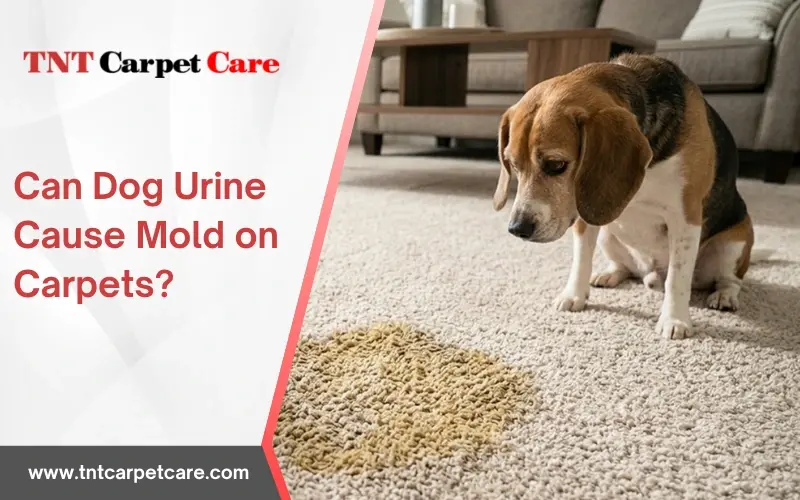
Can dog urine cause mold? Yes, dog urine can absolutely cause mold to grow on and under your carpet. Pet urine creates a warm, moist, nutrient-rich environment that mold spores need to thrive. Left untreated for as little as 24-48 hours, a single urine accident can trigger mold growth in carpet fibers, the carpet pad, and even the subfloor beneath.
In this guide, you’ll learn exactly why dog urine causes mold, which types of mold are most dangerous, how to identify mold under your carpet, the health risks involved, and the most effective steps to stop mold growth before it becomes a costly structural problem.
Why Does Dog Urine Cause Mold to Grow?
Dog urine is not just water. It contains urea, ammonia, uric acid, bacteria, and proteins, a complex organic mixture that acts as a food source for mold and other microorganisms. When urine soaks into carpet fibers and the underlying padding, it creates three conditions that mold thrives in:
- Moisture: Urine saturates porous materials that don’t dry quickly on their own
- Organic nutrients: Urea and proteins feed mold colonies
- Warmth: Carpet insulates the moisture, keeping it warm and stagnant
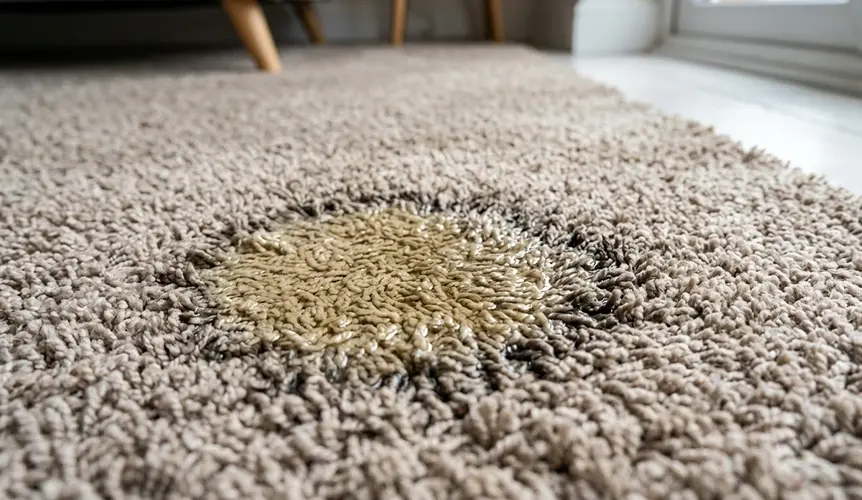
Most carpet padding is between 1/2 and 3/4 inch thick, and it acts like a sponge by absorbing urine and slowly releasing moisture over time. Even when the carpet surface feels dry, the padding underneath and the subfloor below can remain damp for days or even weeks. This trapped moisture can lead to lingering odors, bacteria growth, staining, and potential damage to the flooring structure if not properly treated.
Key fact: Mold can begin colonizing damp organic material within 24-48 hours under the right temperature and humidity conditions, according to the EPA’s guidelines on mold and moisture.
How Fast Can Dog Urine Cause Mold on Carpets?
Mold growth from dog urine depends on several factors:
- Temperature: Mold grows fastest between 77°F and 86°F (25°C-30°C)
- Humidity: Indoor humidity above 60% accelerates mold growth significantly
- Carpet type: Thick, dense carpets and heavy padding retain moisture longer
- Ventilation: Poorly ventilated rooms dry more slowly
In warm Southern California climates like El Cajon and La Mesa, where indoor humidity can spike during summer months, mold can establish visible colonies under carpet within 48-72 hours of an untreated urine accident.
What Types of Mold Grow From Dog Urine?
Not all mold is the same, and some types that grow from pet urine are genuinely dangerous. The most common mold species found under urine-contaminated carpets include:
| Mold Type | Color | Health Risk Level |
|---|---|---|
| Penicillium | Blue-green | Moderate respiratory irritation, allergies |
| Aspergillus | Yellow-green | High lung conditions, immune complications |
| Cladosporium | Dark brown/black | Moderate asthma trigger, skin irritation |
| Stachybotrys (black mold) | Black/dark green | Severe mycotoxins, serious respiratory illness |
| Alternaria | Dark gray | Moderate sinus issues, allergic reactions |
Penicillium and Aspergillus are the most frequently identified mold types in carpet contamination studies. These molds produce spores that become airborne when carpet is disturbed, vacuumed, walked on, or moved, spreading throughout your home’s air supply.
Health Risks of Mold from Dog Urine on Carpet
Mold exposure is a serious health concern, especially for vulnerable household members. The health effects of mold from dog urine in carpet include:
Respiratory Issues
- Chronic coughing and wheezing
- Worsening of asthma symptoms
- Difficulty breathing, especially in enclosed spaces
- Increased severity for people with COPD, emphysema, or bronchitis
Allergic Reactions
- Persistent runny nose and sneezing
- Watery, itchy eyes
- Skin rashes or irritation
- Sinusitis (sinus inflammation)
Neurological Symptoms (Severe Exposure)
- Headaches and migraines
- Fatigue and cognitive fog
- Dizziness, particularly from ammonia buildup in poorly ventilated spaces
Who Is Most at Risk?
Children under 5, adults over 65, pregnant women, and anyone with a pre-existing respiratory condition or compromised immune system face the highest risk from mold exposure. Even healthy adults can develop symptoms after prolonged exposure to mold-contaminated carpet.
Does Dog Urine Smell Different from Mold?
Many homeowners struggle to distinguish between pet urine odor and mold odor, and sometimes both are present at the same time.
| Feature | Dog Urine Smell | Mold/Mildew Smell |
|---|---|---|
| Description | Sharp, ammonia-like, pungent | Musty, earthy, damp like wet leaves |
| Intensity | Strongest when wet, fades then returns with humidity | Persistent, constant regardless of moisture |
| Location | Concentrated at accident spots | Can be diffuse, spreading through rooms |
| Indicator | Fresh accident or dried urine crystals | Active mold colony beneath carpet |
If you’re detecting a musty, earthy odor that doesn’t respond to regular cleaning or pet odor sprays, you likely have mold growing beneath the carpet surface, not just surface-level pet odor.
How to Tell If Dog Urine Has Caused Mold Under Your Carpet
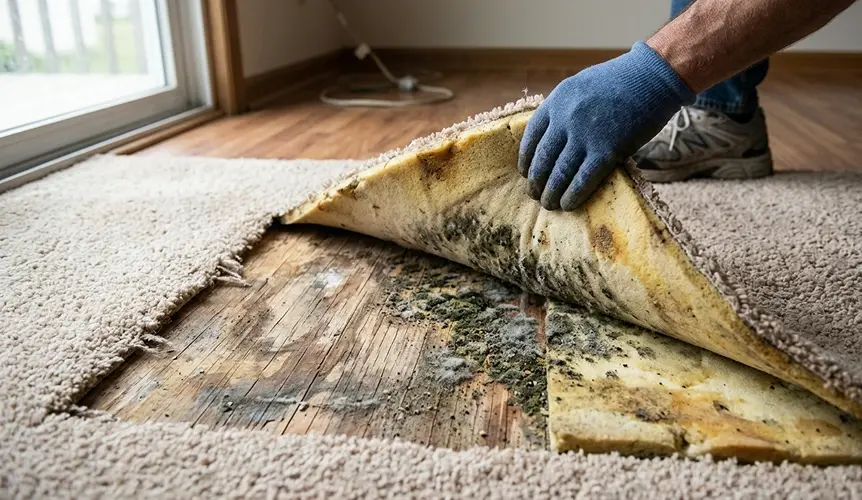
Mold under carpet is often invisible from above. Here are the warning signs homeowners should watch for:
Visual Signs:
- Discoloration or dark staining on carpet from below the surface
- White, gray, or green fuzzy growth visible at carpet edges or seams
- Warping, bubbling, or lifting of carpet from the subfloor
Smell Signs:
- Persistent musty, earthy odor after cleaning
- Smell intensifies in warm or humid weather
- Odor returns within days of shampooing
Physical Signs:
- Unexplained increase in allergy or asthma symptoms among household members
- Pets scratching or avoiding certain floor areas
- Visible water staining on the subfloor if carpet is pulled back at a corner
The Lift Test: Carefully pull back a corner of carpet in the affected area. Check the padding and subfloor for dark discoloration, fuzzy growth, or a strong musty odor. This is the most reliable home check.
How to Prevent Mold from Dog Urine on Carpet
The best defense against mold is speed. Here’s a step-by-step prevention protocol every pet owner should know:
Immediate Response (Within 5 Minutes)
- Blot, don’t scrub. Use clean white cloths or paper towels to absorb as much urine as possible by pressing firmly. Scrubbing spreads the urine deeper into the fibers.
- Apply an enzymatic cleaner. Enzymatic pet cleaners break down uric acid crystals that standard cleaners cannot neutralize.
- Allow full dwell time. Let the enzymatic cleaner sit for the full time listed on the label — typically 10-15 minutes.
- Blot dry again. Remove as much moisture as possible.
- Ventilate. Open windows and use a fan directed at the area to speed drying.
After Cleaning
- Use a moisture meter or UV blacklight to confirm the area is fully dry
- Apply a carpet-safe antimicrobial spray to inhibit mold spore activation
- Consider placing a dehumidifier in rooms where pets frequently have accidents
Long-Term Prevention
- Schedule professional deep carpet cleaning every 6-12 months for pet-owning households
- Consider waterproof carpet padding for homes with dogs prone to accidents
- Address high indoor humidity, keep it below 50% using air conditioning or a dehumidifier
When Is DIY Cleaning Not Enough?
Home cleaning methods address surface contamination but often fail to reach the carpet pad and subfloor, where mold actually grows. You should callergic reactions all a professional carpet cleaning specialist when:
- The urine accident was not treated within 12-24 hours
- You detect a persistent musty odor after multiple cleanings
- The affected area is larger than 12 inches in diameter
- A household member with respiratory conditions has developed new or worsening symptoms
- You can see visible mold or dark staining under the carpet edge
- The carpet has been wet or damp more than once in the same location
Professional carpet cleaning services use hot water extraction, antimicrobial treatments, and commercial-grade drying equipment that penetrate the carpet pad, providing the thorough decontamination that household cleaners simply cannot achieve.
Dog Urine, Mold, and Your Wood Subfloor
One of the most overlooked consequences of untreated pet urine is damage to the subfloor beneath the carpet. When urine saturates carpet and padding repeatedly, it reaches the wood subfloor and causes:
- Warping and buckling of floorboards
- Wood rot in severe cases
- Permanent black staining from mold colonies embedded in wood grain
- Structural weakening that can require full subfloor replacement, a repair that can cost $500-$3,000 or more depending on the affected area
This is why prompt treatment and annual professional cleaning are financially important, not just hygienic ones.
Need Professional Help With Dog Urine and Carpet Mold?
If dog urine has soaked into your carpet, quick action is important to help prevent mold growth, lingering odors, and costly damage beneath the surface. TNT Carpet Care provides professional deep carpet cleaning services designed to remove contamination from carpet fibers, carpet padding, and subfloors.
Our team uses advanced cleaning and drying methods to help eliminate odors, reduce moisture, and restore a cleaner, healthier indoor environment.
We proudly serve homeowners in El Cajon, La Mesa, and Alpine.
Book your cleaning service with us today and give your home a cleaner, healthier fresh start.
Frequently Asked Questions: Dog Urine and Carpet Mold
Can a single dog urine accident cause mold?
⇒ Yes. A single untreated accident in warm, humid conditions can cause mold to begin growing within 24-48 hours, especially in thick carpet with dense padding that retains moisture.
Does cleaning dog urine with vinegar prevent mold?
⇒ White vinegar has mild antimicrobial properties, but it does not fully neutralize uric acid crystals or penetrate carpet padding effectively. Enzymatic cleaners are significantly more effective at eliminating the organic material that mold feeds on.
Can you smell mold caused by dog urine?
⇒ Yes. Mold from dog urine produces a distinct musty, earthy odor that differs from the sharp ammonia smell of fresh urine. If your carpet smells musty even after cleaning, mold may already be growing beneath the surface.
Is mold from dog urine dangerous to humans?
⇒ Yes, mold exposure is associated with respiratory symptoms, allergic reactions, headaches, and in severe cases, more serious lung conditions. Aspergillus and Stachybotrys (black mold) species are particularly hazardous.
How do I know if there is mold under my carpet?
⇒ Warning signs include a persistent musty odor, dark staining visible at carpet edges, worsening allergy symptoms in household members, or visible discoloration when a carpet corner is lifted. A professional inspection with moisture meters provides a definitive assessment.
How much does it cost to remove mold from carpet due to dog urine?
⇒ Professional pet urine and mold treatment typically costs between $150–$400 depending on the affected area size, severity of contamination, and whether subfloor treatment is required. Preventative annual cleaning is far less expensive than replacing contaminated carpet or a damaged subfloor.
Can I stay in my home while mold from dog urine is being treated?
⇒ In most cases, yes. For small affected areas, professional treatment is safe to be present for. For widespread mold contamination, your technician may recommend temporary ventilation precautions. A professional assessment will determine the appropriate protocol.